

Life at Da Vinci
School trip to the Crocodile Farm in Pierrelatte
16 October 2026
On Friday 9 October, the whole school, from pre-school to primary, travelled to Pierrelatte, in the Drôme, to spend the day at the Ferme aux Crocodiles, the Crocodile Farm.
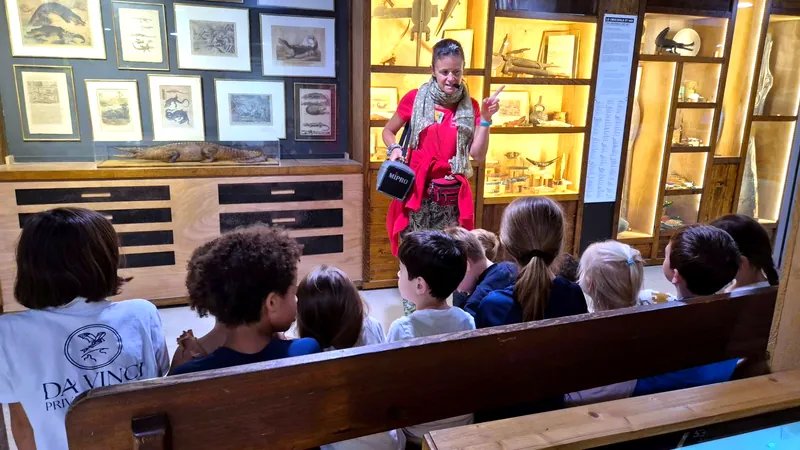
Arriving at 10 am, the children followed the farm’s “Mini Journée Découverte”, its discovery day for schools: a guided tour, a workshop with a keeper, and the playground to finish.
Two hours with a guide among the reptiles
For nearly two hours, a guide led the children around the park. They discovered several species, where they live, what they eat and how they reproduce.
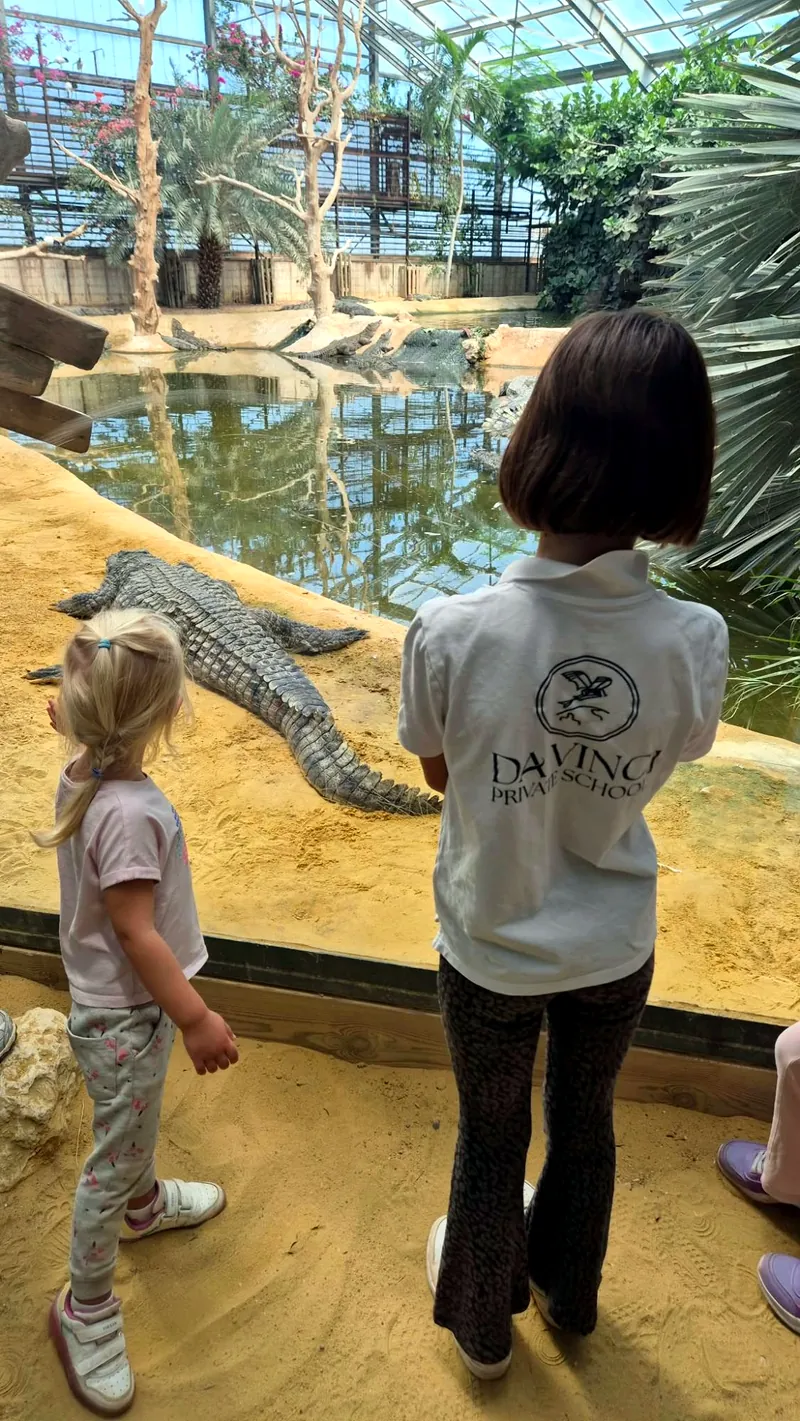
How do crocodiles lay their eggs? How do the young develop? What happens when they come out of their shell?
One discovery really surprised them: from the moment they hatch, baby crocodiles can move about and catch their own food, even though the mother often watches over them at first. A human baby, by contrast, depends on adults for years.
The guide also told them that crocodiles have been born in the park after spells of very hot weather. In these reptiles, temperature matters a great deal during incubation: it even determines whether an egg will produce a male or a female.
Faced with a living animal, the questions come naturally: why does it look like that, what does it eat, where does it live, how does it protect its young?
An aviary and giant tortoises
The crocodiles were not alone. The children walked through the aviary and watched giant tortoises. They compared their size, the way they move, their habitat and their food.
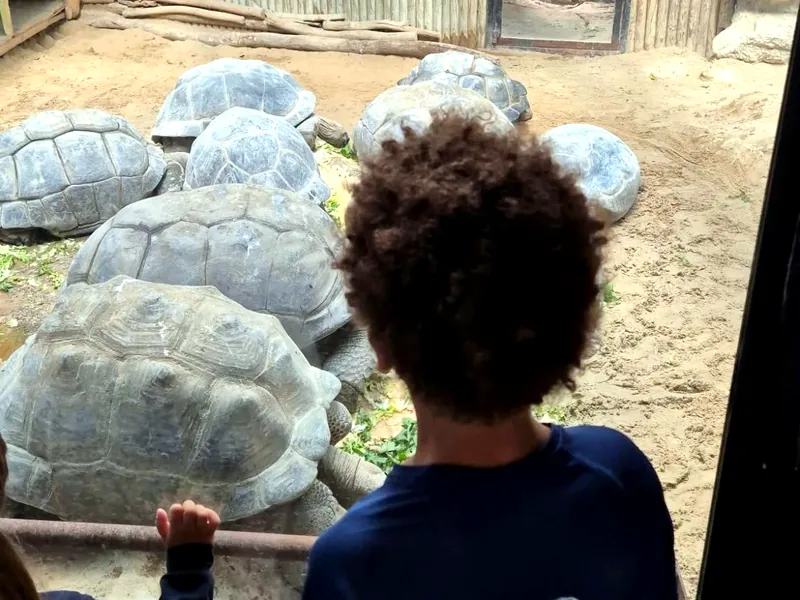
For the youngest, seeing a real animal brings to life a word learned in class. The older ones learn to observe more closely, to compare and to remember precise information.
With a keeper: how a snake sheds its skin
A keeper then introduced a snake to the children and explained how snakes shed their skin. Our skin renews itself without us noticing; a snake’s usually comes off in one piece, several times a year and especially while it is growing, like a casing it leaves behind. The keeper passed round one of these skins and the children were able to touch it.
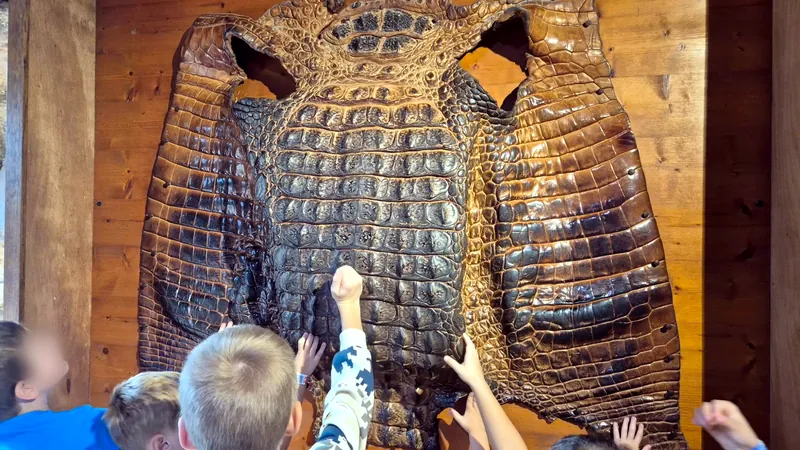
They also got a close look at a boa.
An animal that seems frightening at first becomes more familiar once you understand how it lives, what it needs and why it behaves the way it does. The aim is not to stop being afraid, but to know the world around us better. Curiosity is a good place to start.
Back in class, the children become the experts
Back at school, the primary children each chose their favourite animal from the visit, then prepared a presentation and wrote a text about it. They had to remember, sort information, organise their ideas and present them to others.
This work draws on several skills at once: writing, finding information, memory, organising one’s thinking. And a child talking about an animal they have seen, touched or watched up close has precise memories to hang their learning on. That is the principle of active learning: starting from real experience.
Little ones and older ones, a day together
This trip brought the whole school together, from pre-school to primary.
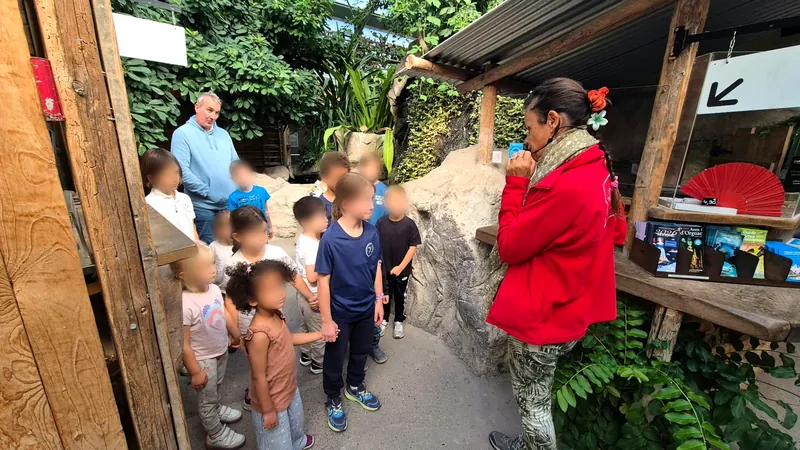
The youngest discover a new place alongside older children. The older ones look out for the little ones, keep them company and sometimes lead the way.
Living together is also built through small everyday acts: waiting for someone, helping them find their way, showing them what you have just seen, checking they are keeping up.
The older children gain a sense of responsibility. The little ones gain confidence and gradually find their place in the school.
And to finish, the playground
After the visits and explanations, the children enjoyed the crocodile-themed playground: running, climbing and letting off steam together.
This free time matters too. It lets them catch their breath, tell each other what they saw and simply enjoy being together outside school.
Two big trips a year for the whole school
On top of the weekly outings (forest, beach, library…), the teaching team organises two trips that bring the whole school together: one at the start of the school year, the other at the end. They give the children shared experiences that feed their curiosity and extend what they learn.
Last year (2025-2026), the children visited the Seaquarium in Le Grau-du-Roi and Micropolis, the “City of Insects”. This year, the Crocodile Farm introduced them to reptiles and how they adapt to their environment.
Discover our teaching programme, our bilingual pre-school and our bilingual primary school.
Ready to discover the Cocon d'Évolution?
The micro-campus welcomes 45 children in total. Take the time to talk with us and see whether the school is right for your child.
Apply for Admission