

Private bilingual school in Castelnau-le-Lez, near Montpellier
When school stops respecting a child's own pace, it is their inner resources that go out.
Da Vinci Private School follows another path: a demanding educational environment, built to a human scale, where a child can learn without closing up.
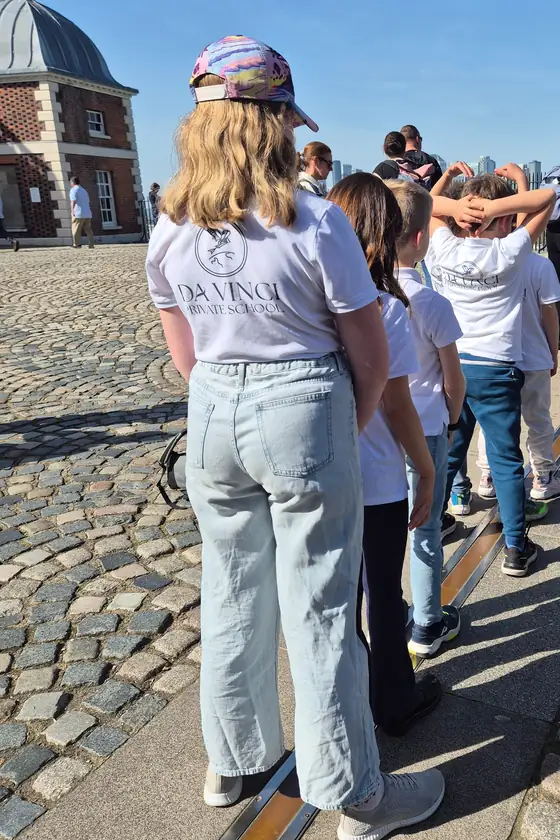
Academic accomplishment begins with emotional security.
The region's only bilingual micro-campus (15 children per class), combining French rigour with Anglo-Saxon pedagogy.
See the programme → Our international school near Montpellier →A question you may be asking yourself
Is your child bored in an overcrowded classroom?
In a standard class of 30, a child receives on average only 180 seconds — three minutes — of individual attention a day. That ratio guarantees anonymity, and pushes the liveliest children into a silent adjustment in which they learn to think less so as not to disturb. Anonymity is not inevitable: it is a problem of infrastructure, and we have solved it.
Our answer
At Da Vinci, we have done away with anonymity
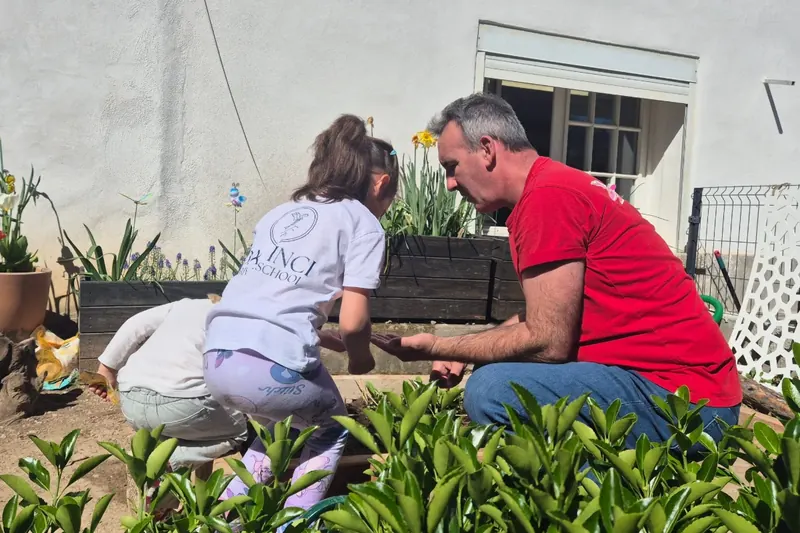
With 45 children in total, we know every one of them — their pace, their strengths, what makes them grow. That is the Micro-Campus: a deliberately limited setting so that every child stays visible.
Three pillars, one ambition
Micro class sizes
15 children per class, never more — for individual attention that is real, not a sales promise.
Native bilingualism
Two languages in equal measure, taught by native speakers, from the earliest years.
Hygge & well-being
An Anglo-Saxon pedagogy in which emotional security is the condition for accomplishment, not the obstacle to it.
100% of families re-enrol* * excluding house moves, moves up to secondary school (6e) and exclusions.
From our bilingual pre-school, from age 2, to our bilingual primary school, up to CM2.
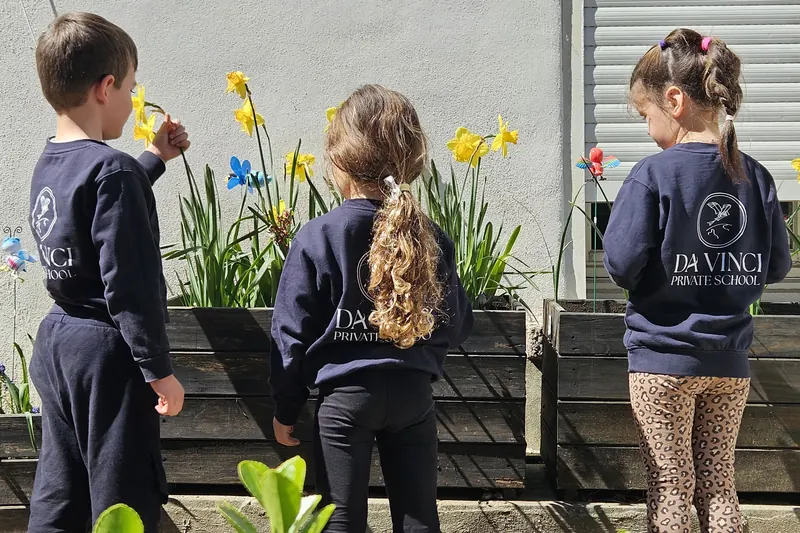
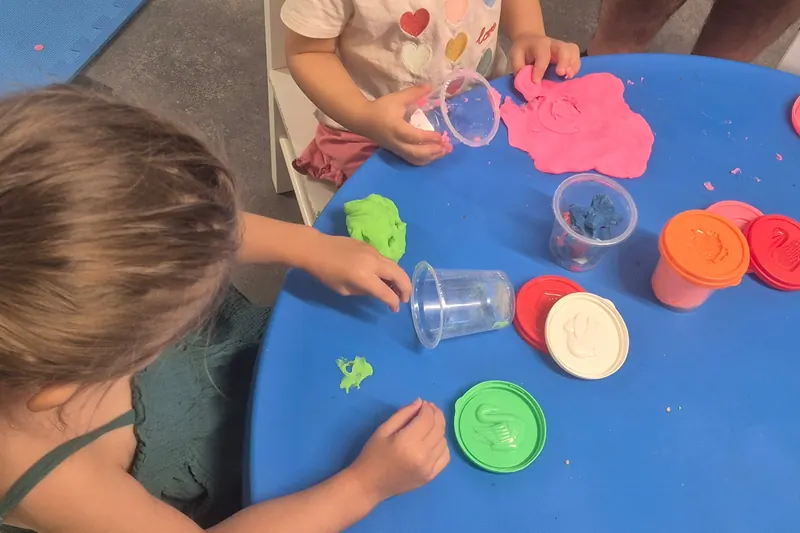
Life on the Micro-Campus
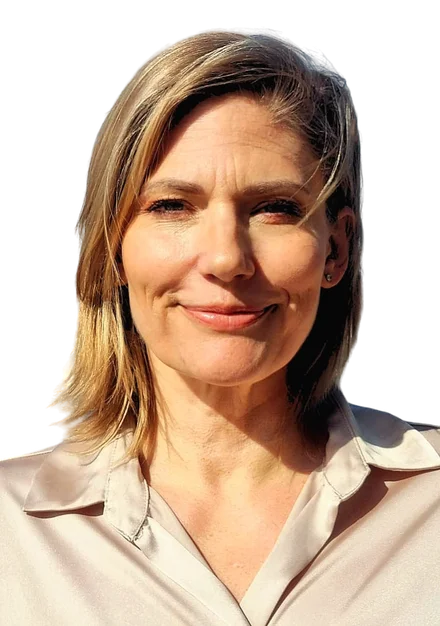
The founder
Pernille Kongstad
Pernille Kongstad founded Da Vinci school in Castelnau, where she lives with her three daughters and her little boy. By creating a school in the region where she lives, she wishes to offer families around Montpellier a school that is open to the world, supported by experienced professionals in international education.
Read her story →What school parents say
“A deeply caring school, with solid, high-quality teaching that above all respects each child’s pace. […] We have seen very positive and significant progress since he arrived.”
“What we particularly appreciate at Da Vinci Private School is the human scale of the school, which allows for very personal support. […] Our daughter went through a period of separation anxiety; the school supported her with great patience and kindness.”
Reviews written in French, translated here.
 Read all the reviews on Trustpilot →
A strict cap: 15 children per class · 45 children per school.
Ready to discover the Cocon d'Évolution?
The micro-campus welcomes 45 children in total. Take the time to talk with us and see whether the school is right for your child.
Apply for AdmissionFrequently asked questions
Where is Da Vinci Private School located?
The school is at 69 rue des Églantiers, 34170 Castelnau-Le-Lez, on the edge of Montpellier in the south of France. Most families come from Castelnau-le-Lez, Montpellier, Le Crès, Jacou, Clapiers, Vendargues, Saint-Aunès, Montferrier-sur-Lez, Saint-Clément-de-Rivière and Saint-Drézéry.
What ages does the school take?
The micro-campus welcomes children from 2 to 11 years old, from pre-nursery through to the final year of primary school.
How many children are there in a class?
15 at most, and 45 across the whole campus — 3 classes of 15, never more. The cap exists so that no child can go unnoticed.
Read more:Why can small classes change the way a child learns?
Is the teaching genuinely bilingual?
Yes. The week is split equally between French and English, and every child has two teachers: one English-speaking and one French-speaking. This is teaching delivered in both languages, not English lessons bolted onto a French curriculum.
Read more:Bilingual immersion or English lessons: what difference for a child?
What are the opening hours, including wraparound care?
The campus is open Monday to Friday from 7.45am to 6pm, and until 4.30pm on Wednesdays. Before- and after-school care is included within those hours, and lunch is served at school.
Who prepares the children's meals?
Meals are prepared by De la terre à l'assiette, a caterer based in Clapiers, near Montpellier, which cooks organic, local and seasonal food. Children have lunch at school.
Does the school have outdoor space?
Yes. The playground is tree-lined, with no concrete. The campus is two minutes' walk from the garrigue scrubland, vineyards and a sports ground.
Is the school state-contracted or independent?
Da Vinci Private School is an independent private school — "hors contrat" in French. That status is what allows it to choose its own teaching approach, its own rhythm, and an equal split between two languages, none of which would be possible for a state-contracted school. The school is nonetheless registered with the authorities and supervised by the Montpellier education authority, which inspects the teaching provided as well as the health and safety of the children. The school was inspected in 2026.
Read more:State, private or international school: what difference for a child?
How much does the school cost?
We give you the figure at first contact, before any application: call +33 4 34 81 09 85 or write to contact@davinciprivateschool.com. Applying costs nothing — there is no application fee and no registration fee. Meals and wraparound care are chosen à la carte, at extra cost.
Is Da Vinci Private School a Montessori school?
No. The school follows an international curriculum, taught in schools around the world, which includes the requirements of the French national curriculum. What defines it: teaching split equally between French and English, with a teacher for each language, and classes of no more than 15 children. Montessori is a teaching method; an equal split between two languages is a choice of organisation. They are two different approaches, and a visit to the campus shows ours in practice.
Read more:Montessori or active learning: what is the difference?
Do you welcome children with additional needs (ADHD, autism spectrum, high potential)?
Yes. Classes of no more than 15 children allow teaching to be individualised. Each situation is discussed with the family before admission, to check together that the school can meet the child's needs. Where individual support is needed, it is arranged with the family.
Read more:Individualised teaching: how to adapt learning to each child