


A driver of academic success for the child
The Educational Program
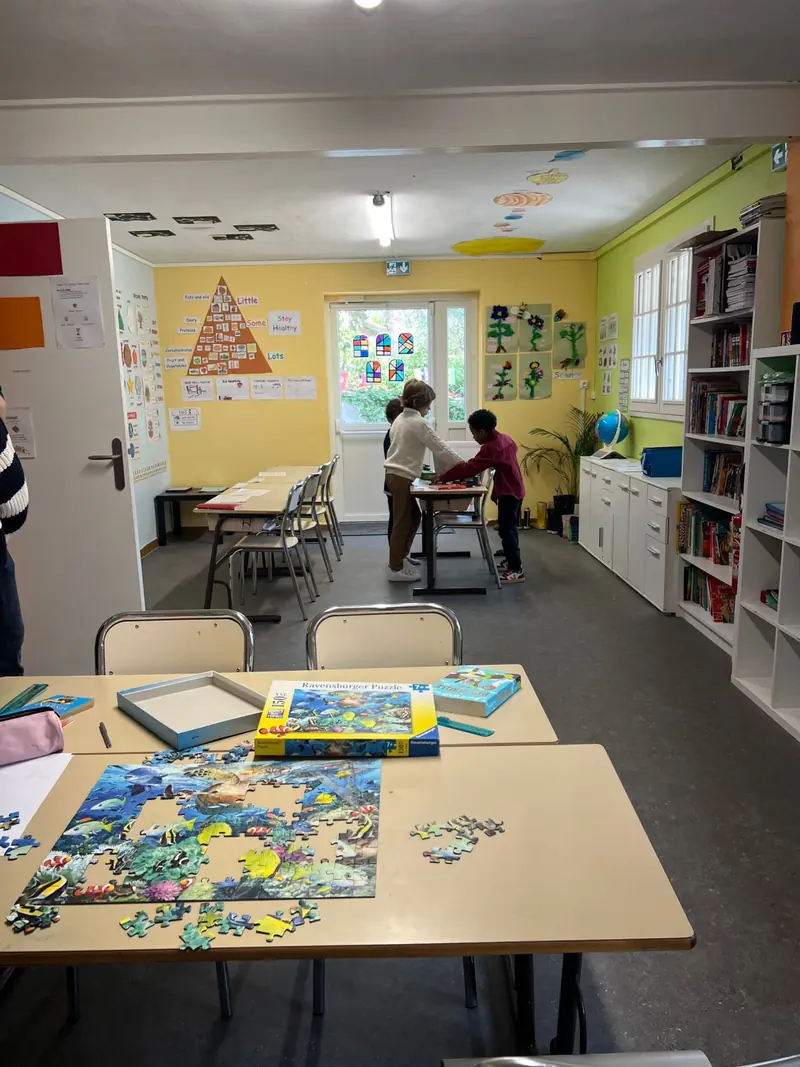
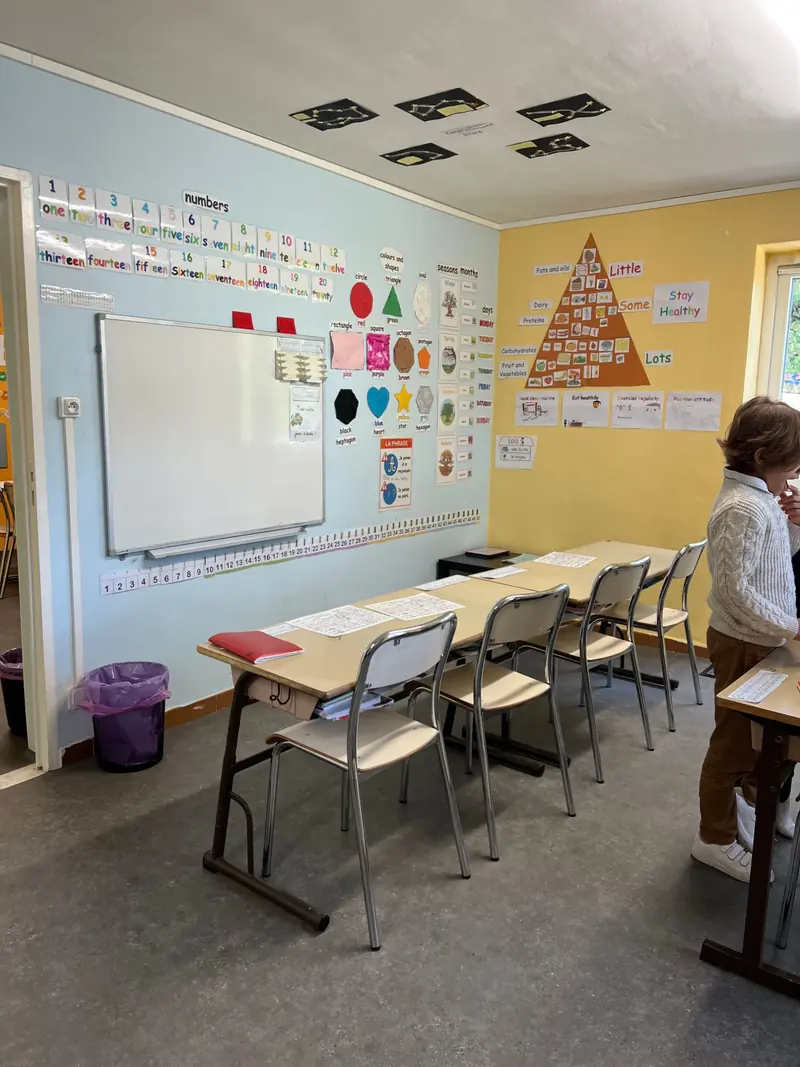
At Da Vinci Private School in Castelnau-le-Lez, the week is split in equal halves, one in English and one in French — every child has an English-speaking teacher and a French teacher.
Understanding
The child develops a deep understanding of essential concepts.
Flourishing
The child acquires — and above all puts into practice — every skill they need in order to flourish.
Positivity
The child develops a positive attitude towards learning, towards their environment and towards others.
Responsibility
The child is trusted with responsibility.
An international programme, adapted to France
Beyond fully bilingual immersion, the school draws on a teaching programme developed over some sixty years, kept continuously up to date, and followed by international schools worldwide. Thanks to this teaching, children can move back with ease into a national curriculum they left a few years earlier.
The programme is interdisciplinary: each subject is approached alongside the others as a coherent whole — mathematics, for instance, is also approached through science, and geography through music. The programme also incorporates the essential points of the French Éducation Nationale curriculum, so that it prepares children equally well to continue their schooling in a French or an international institution.
Assessment that makes teaching individual
The programme uses a range of assessment tools that measure precisely where each child stands and make it possible to tailor the teaching that suits them. Through daily activities, teachers continuously gauge the children's progress and organise the class into groups working at the same level, while progress is reported to parents at regular intervals.
The primary-school programme places the emphasis on critical thinking, personal responsibility, curiosity and a willingness to help others — it draws the child in so that they take an active part in their own learning and become the one driving it.
A driver of academic success
Individualised education in a stimulating environment is one of the major advantages of Da Vinci Private School. Immersive bilingual schooling from early childhood, through the powers of reasoning, abstraction and memorisation it calls upon, leads to stronger performance across every subject taught — including the mother tongue.
From today, the school prepares each child for school exchanges between countries, for European university mobility and for professions that are becoming international, while offering them a wide choice of teaching activities — spontaneous and collective — so that they learn to enjoy learning.
Ages 2 to 11
Children welcomed
15
Children per class, maximum
Inspected
By the Inspection Académique de l’Hérault
Ready to discover the Cocon d'Évolution?
The micro-campus welcomes 45 children in total. Take the time to talk with us and see whether the school is right for your child.
Apply for AdmissionFrequently asked questions
Do the children go on outings outside school?
Yes. At least once a week, children go on an outdoor learning trip: the forest, the beach, the library…
Read more:A child's curiosity: why it is essential for learning
Do the children go on trips?
Yes. On top of the weekly learning outings, the school has organised trips to London and Copenhagen.
Does the school have a library?
Yes, a small library with a French section and an English section.
Do the children wear a uniform?
Yes. The uniform creates a sense of unity and of belonging to a group, and smooths out differences in what the children wear. And, let's be honest, it makes choosing clothes in the morning a great deal easier.
Read more:School uniform: why we chose it
What curriculum does Da Vinci Private School teach?
An international curriculum developed over some sixty years and used by international schools worldwide. It is interdisciplinary — mathematics is also approached through science, geography through music — and it incorporates the core requirements of the French national curriculum.
Read more:Active learning: what it really is, and how children learn
Will my child be able to join a French school afterwards?
Yes. The curriculum deliberately covers the French national requirements, so a child can continue either in a French school or on an international track.
How is the week split between French and English?
Equally: half the school week in French, half in English, with a dedicated teacher for each language.
Read more:Can a child learn two languages without mixing them up?
How is progress assessed?
Through continuous observation during everyday activities rather than ranking. Teachers measure each child's level, group the class by ability for given activities, and report progress to parents regularly.
Read more:How to follow a child's progress at school beyond marks