


Ages 2 to 5 · TPS, PS, MS, GS
Bilingual pre-school in Castelnau-le-Lez
Da Vinci Private School's pre-school welcomes children aged 2 to 5, from the pre-nursery year (TPS) to the final pre-school year (GS), in Castelnau-le-Lez, on the edge of Montpellier. Days are spent in French and in English, in equal measure, in classes of no more than 15 children.
From age 2 to age 5
- Pre-nursery — TPS (age 2): a first school year, full days or half days. Half days are available in the TPS only.
- Pre-school — PS, MS, GS (ages 3 to 5): full-time schooling. In France, education is compulsory from age 3 (article L131-1 of the Code de l'éducation).
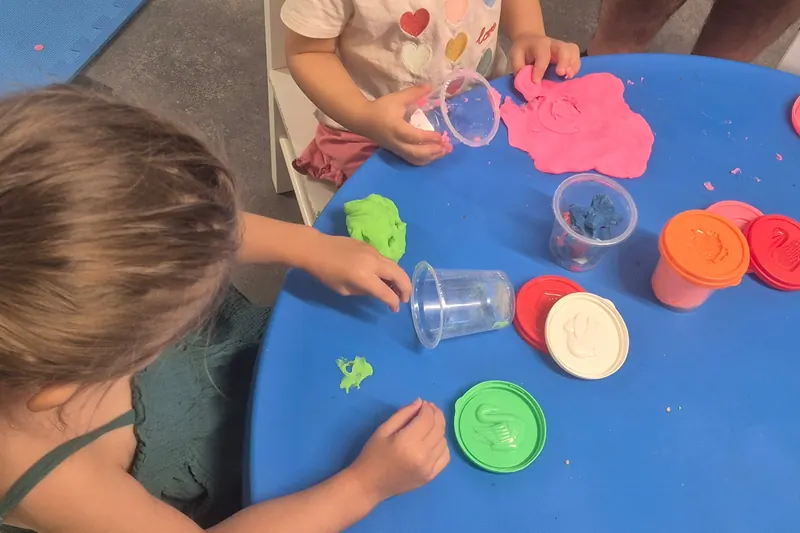
Pre-school has a clear purpose: to give the child the independence they will need for the core learning of primary school — reading, writing, counting — through play, the routines of the day and a sense of security.
In the final pre-school year: the CP Bridge Programme
So that moving up to CP (the first year of primary school) happens without a break, children in the final pre-school year (GS) follow the CP Bridge Programme (« Protocole Passerelle CP »). It strengthens the fundamentals — reading, writing, language — in a calm, gradual and individual way.
- In very small groups: no more than 4 children, at each child's own pace.
- Reading and writing, one hour a day, with the French-speaking teacher: preparing for handwriting, phonological awareness, first steps in reading.
- English, 30 minutes a day, with a native English-speaking teacher: spoken English, first steps in writing, a gradual introduction to reading in English.
- Practical preparation: GS children have lunch and share break times with the CP classes. They get used to the rhythm and surroundings of the "big ones", and start the next school year without apprehension.
What it means for your child:
- closer attention from the teacher, thanks to the very small group;
- first formal learning — reading, writing — at their own pace, in a climate of trust;
- more confidence in English before CP: spoken, and in first steps with the written word;
- a bond already formed with the "big ones": the CP surroundings and rhythm feel familiar when the new year starts;
- fewer breaks in continuity and less apprehension when moving up to CP.
Outings every week
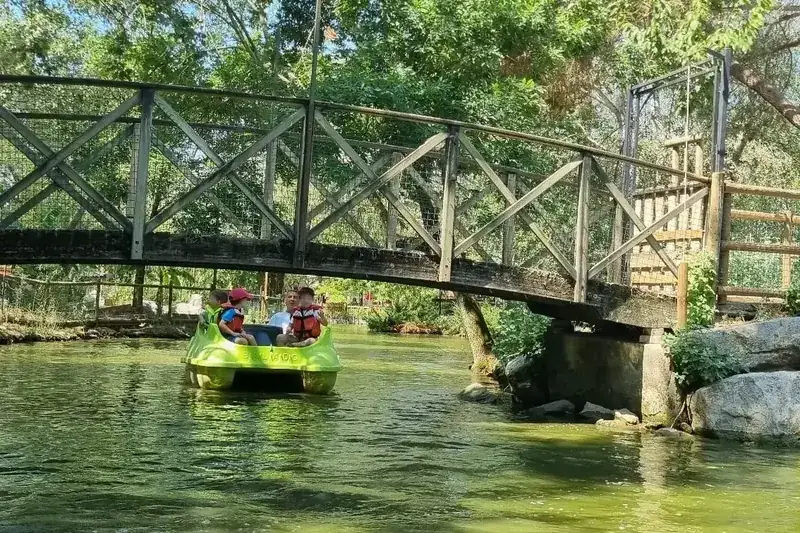
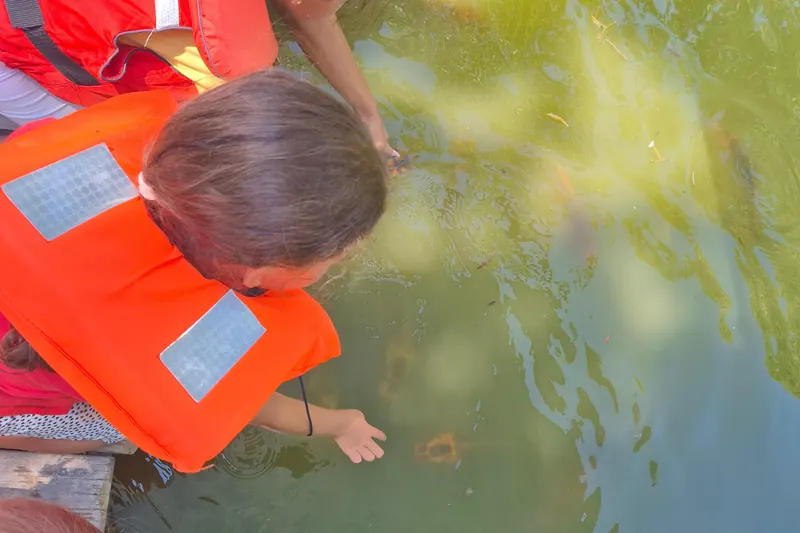
At least once a week, children leave the school for an outdoor learning trip: the forest, the beach, the library…
Two languages in equal measure, from age 2
Half of the time is spent in French and half in English, with a teacher for each language. The child does not study English as a subject: they hear it and speak it all day long, through play and the routines of the class. That is the difference between a bilingual school and a school offering "extra English".
15 children per class, never more
The campus welcomes 45 children in total. With 15 children per class, the teacher observes each child every day — their interests, their progress, what holds them back — and adapts activities accordingly, rather than moving the whole group at the same pace.
Assessment through observation
There are no marks in pre-school. Progress is measured by observing each child's behaviour and motor development, and every child has a portfolio of their work. Parents receive a bilingual report each term, in French and in English, with individual comments. More about assessment.
The school day, 7.45am to 6pm
The campus is open Monday to Friday from 7.45am to 6pm, and until 4.30pm on Wednesdays, with lunch served at school. Before- and after-school care, meals and the Wednesday Da Vinci Club are chosen as optional extras. What the fees cover and what comes on top.
Getting to school
The campus is at 69 rue des Églantiers, Castelnau-le-Lez. Families come from Montpellier and the neighbouring towns: Le Crès, Jacou, Clapiers, Vendargues, Saint-Aunès, Montferrier-sur-Lez, Saint-Clément-de-Rivière, Saint-Drézéry. Directions and contact.
Applying for pre-school
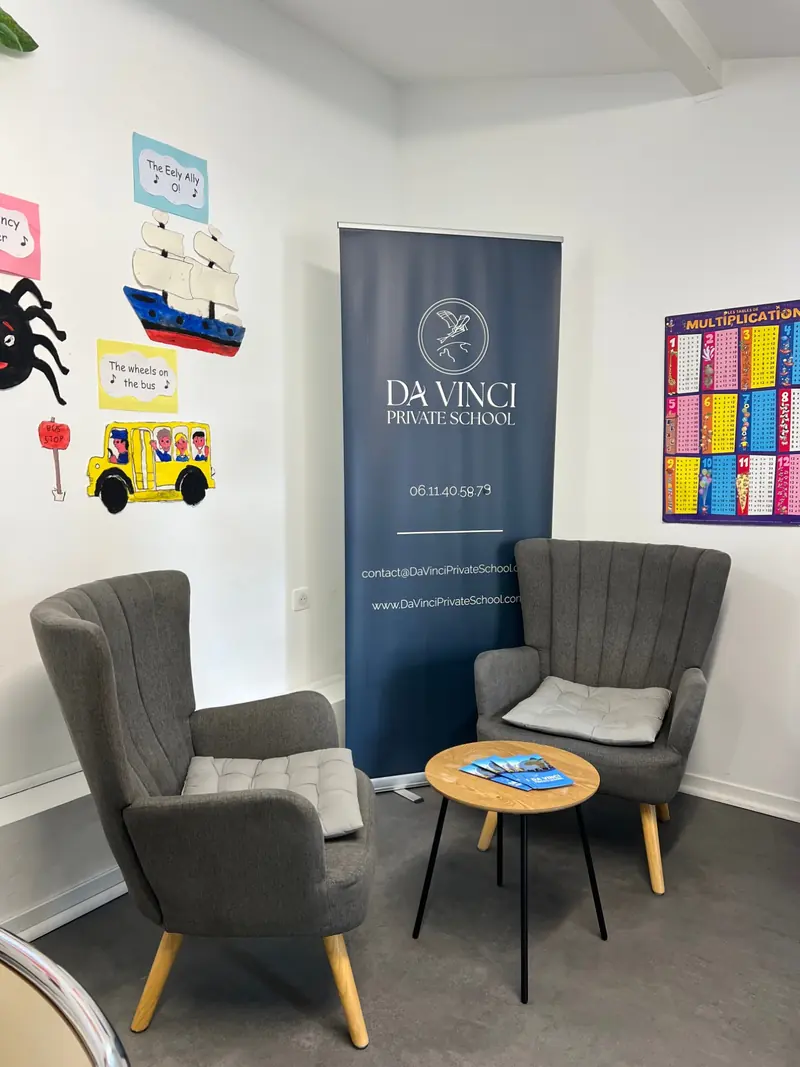
Everything starts with a visit to the campus, by appointment, followed by a first conversation with the team. Applying is free, and you are given the fees at that first conversation. Places are limited by the 45-child cap.
Moving on to primary school afterwards? See the bilingual primary school, CP to CM2.
Ages 2 to 11
Children welcomed
15
Children per class, maximum
Inspected
By the Inspection Académique de l’Hérault
Ready to discover the Cocon d'Évolution?
The micro-campus welcomes 45 children in total. Take the time to talk with us and see whether the school is right for your child.
Apply for AdmissionFrequently asked questions
Private or state pre-school: what changes for a 3-year-old?
An independent school does not have to follow the national programmes, but it must enable every child to acquire the common core of knowledge, and the education authority checks this. Da Vinci Private School includes the French national requirements. What changes here: no more than 15 children per class, a day spent in equal measure in French and in English with a teacher for each language, and individual follow-up recorded in a portfolio and a bilingual report each term.
Read more: State, private or international school: what difference for a child?
My child is 4: is it too late for a bilingual pre-school?
No. In the middle and final pre-school years, English is picked up through immersion, through play and the routines of the class, with a dedicated English teacher. Each child's level is observed from the day they arrive, and activities are adapted to it.
Read more: At what age should a child start learning English?
How does the final pre-school year prepare children for CP?
Through the CP Bridge Programme (« Protocole Passerelle CP »). In groups of no more than 4, children in the final pre-school year spend one hour a day on reading and writing with the French-speaking teacher, and 30 minutes a day on English with a native English-speaking teacher. They also have lunch and share break times with the CP classes, so the next school year starts in familiar surroundings.
Read more: Independence at school: learning to do it alone without being left alone
What should I ask when visiting a private pre-school?
How many children are there per class, really? Who teaches each language, and for how long? What does a typical day look like? How is progress tracked and shared with parents? What do the fees cover, and what comes on top? Is the school inspected by the education authority? These are the questions we answer at every visit.