


Understanding our approach
A child's curiosity: why it is essential for learning
28 April 2026
“Why?” Then: “Why?” And again: “But why?”
There are times when a child seems to want to understand absolutely everything around them.
Why does the Moon follow us? Why is that ant going over there? Why do we have to do it like that? Why do adults say one thing and sometimes do the opposite?
For a busy adult, these questions can become exhausting. For a child, they are often the sign of something precious: they are trying to understand the world.
A child’s curiosity is therefore not just a pleasant character trait. It can become a real driver of learning, provided the child’s environment allows them to keep it and develop it.
A child does not learn only because someone teaches them
You can pass information on to a child. But it is much harder to pass on the desire to understand.
Curiosity creates exactly that inner drive: “I want to know.”
And when a child really wants to understand something, their attention changes. They search. They observe. They ask questions. They connect it with what they already know. They try. They come back to it. They may even keep thinking about a question long after the activity is over.
Learning is then no longer only something the adult does to the child. It becomes something the child actively seeks.
Curiosity often starts with a question
A child’s question can seem very small: “Why do leaves fall?”
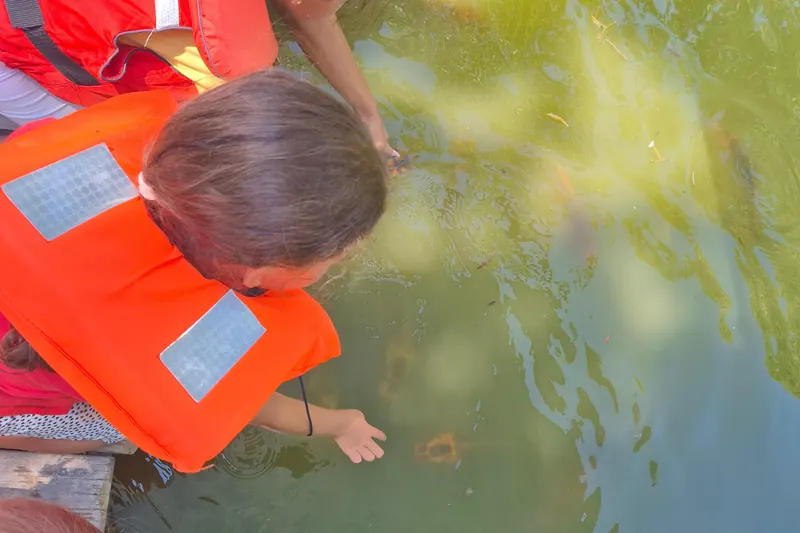
But behind it lies an intellectual process already. The child has noticed something. They have spotted a difference. They don’t fully understand what they see. They are looking for an explanation.
And above all, they implicitly accept that they don’t know yet.
That last step matters. Learning often begins by recognising a gap between what you know and what you would like to understand. Curiosity lives precisely in that gap.
What happens when we answer too quickly?
Answering a child is of course necessary. There is no question of leaving every question unanswered.
But there is another option, sometimes very worthwhile: turning the question back to the child.
- “Why do you think that happens?”
- “What do you notice?”
- “What might your hypothesis be?”
- “How could we check?”
The child then does not simply receive an answer. They learn to look for one. And over time, that difference can become considerable.
Curiosity needs permission
A child can very quickly work out which questions are welcome… and which ones are a nuisance.
If they regularly hear “Stop asking questions”, “I’ve already explained” or “That’s not important”, they may end up learning to keep some questions to themselves.
Conversely, when an adult takes a question seriously, even when it seems strange or naive, the child receives another message: “Your question deserves to be looked into.”
That does not mean the adult must have every answer. They can perfectly well say: “I don’t know. Let’s find out.”
And that sentence can be extremely powerful. The child discovers that not knowing is not a problem. Not knowing can be the start of a search.
Not all children show curiosity in the same way
Some ask a huge number of questions. Others observe in silence. Some touch everything. Others prefer to watch before trying.
Some want to understand how a machine works. Others want to know why their classmate is sad. Some love numbers. Others spend hours making up stories.
So curiosity does not always look like a string of “whys”. It can show itself in an observation, an experiment, something built, a conversation or a game.
The adult’s task is to recognise it, even when it doesn’t look like their own.
School can feed curiosity… or gradually switch it off
School plays a particular role here, because it takes up an enormous part of a child’s life.
Imagine two situations.
In the first, a child comes across a question. The teacher gives the answer immediately, then asks the class to memorise it.
In the second, the teacher uses the question as a starting point. The children suggest hypotheses. They search. They observe. They compare. They experiment. They may discover that their first idea was wrong.
The final knowledge may be identical. The intellectual experience is not.
In the second case, the child has not only learned an answer. They have lived through a process of enquiry.
Active learning gives this curiosity a special place
This is one reason why curiosity is closely linked to active learning.
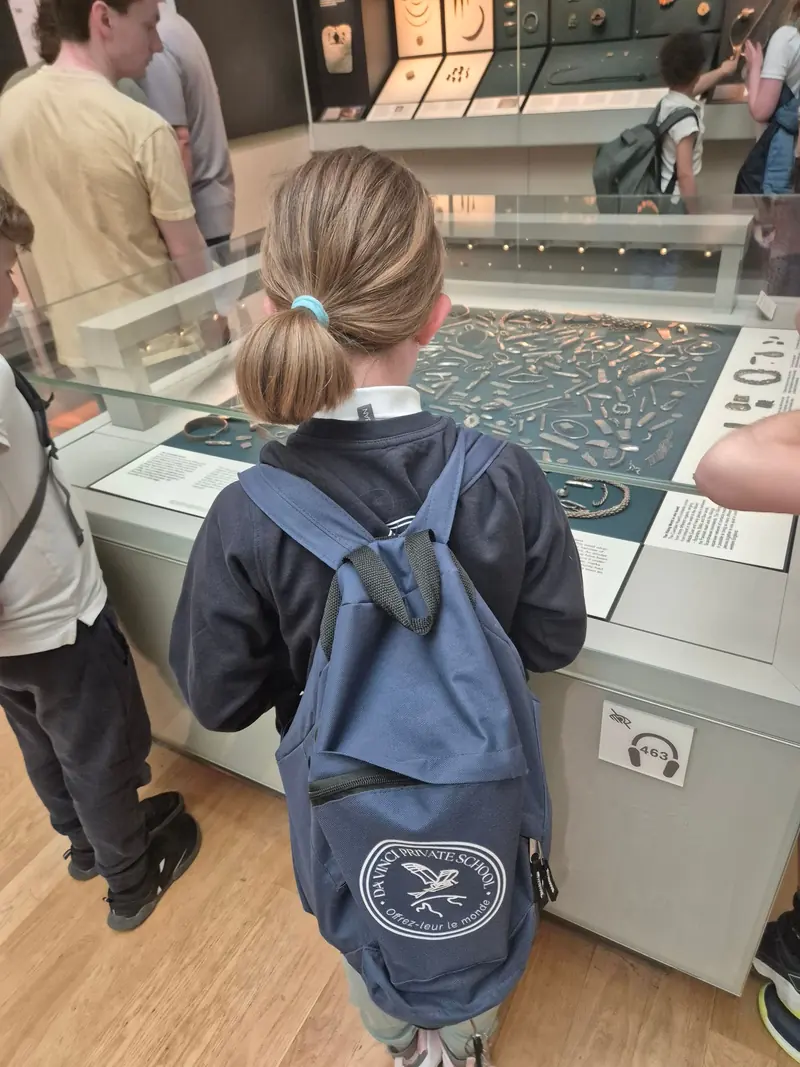
When the child really takes part in their own learning, their questions can become the starting point for an activity. An observation can lead to an experiment. A mistake can lead to a new hypothesis. A question can lead to research. A problem can lead to a project.
The classroom then becomes less a place where you simply wait for the next piece of information, and more a place where you try to understand.
Curiosity is no longer just encouraged in theory. It becomes raw material for schoolwork.
What if the child asks “useless” questions?
This is exactly where things get interesting.
Not every question a child asks fits the day’s immediate objectives, of course. But some seemingly useless questions can open unexpected doors.
A child asks why a bee can fly. That can become a discussion about insects. Then about wings. Then about forces. Then about ecosystems. Then about pollination.
The original question was not necessarily in the curriculum. But it can become a wonderful way into several areas of knowledge.
Curiosity creates connections.
Curiosity and independence go hand in hand
A curious child does not always want to wait for someone to give them the information. They can look for it themselves. Open a book. Observe. Experiment. Ask someone. Compare several explanations. Try.
This is where curiosity meets independence. The aim is no longer simply “I want to know”, but gradually “I’m going to try to understand”.
This shift becomes particularly important as the child grows. Because nobody will always be beside them to answer every question. It is also what problem-solving develops.
Curiosity must not become a performance requirement
There is, however, a trap.
In trying to stimulate a child, you can end up turning every activity into a learning activity. Every walk must teach something. Every game must develop a skill. Every question must produce a worksheet.
And the child ends up feeling they must always be learning.
Yet curiosity also needs freedom. A child can watch a puddle for ten minutes with no particular goal. Build something that serves no purpose. Read about a topic that will never be tested. Ask a question whose answer has no immediate use.
That is learning too. Not all learning needs an immediate return.
How can you preserve curiosity at home?
A few simple habits can make a big difference.
- Don’t always answer straight away. Sometimes ask: “What do you think?”
- Be willing to say “I don’t know”. It shows the child that not knowing, for now, is nothing to be ashamed of.
- Search together. A book, an experiment, an observation or some research can become a chance to learn together.
- Take some questions seriously, even when they seem odd.
- Leave room for free exploration. A child does not need every minute organised in order to learn. Sometimes they simply need time to explore.
How can you tell whether a school really feeds curiosity?
It is an excellent question to ask during a visit. You might ask:
- “What do you do when a child asks an off-topic question?”
- “Can children put forward their own hypotheses?”
- “How much room do you give to experimentation?”
- “Can projects start from the children’s questions?”
- “What happens when a teacher doesn’t know the answer?”
- “Do children have time to explore?”
- “How do you encourage children to find things out for themselves?”
The answers let you look beyond general talk about “creativity” or “fulfilment”. Because a school that truly feeds curiosity has to give it a concrete place in daily life.
Curiosity may be one of the most precious things a child can keep
A child will not stay in one classroom forever. They will change teachers. Then schools. They will learn things their parents don’t know. They will meet problems nobody has given them the solution to.
And one day, they will have to keep learning without anyone telling them exactly what to learn.
At that moment, one question can make all the difference: “Do I want to understand?”
Curiosity alone does not, of course, guarantee success at school. But it can give a child something deeper than an accumulation of knowledge: the desire to keep searching.
And perhaps that is exactly what school should protect. Not only the child’s ability to answer the questions they are asked. But their ability to keep asking them.
At Da Vinci Private School
At Da Vinci Private School, we see curiosity as an essential force in learning.
Children are encouraged to question, observe, experiment, discuss and look for solutions. Projects and hands-on activities regularly start from situations that make children want to understand, rather than simply memorise.
Because a child who asks a question is not necessarily interrupting us. They may be just beginning to learn.
Discover our bilingual pre-school and our bilingual primary school.
Ready to discover the Cocon d'Évolution?
The micro-campus welcomes 45 children in total. Take the time to talk with us and see whether the school is right for your child.
Apply for Admission