


Life at Da Vinci
Halloween: Keeping English Alive Through Culture, Play and Immersion
22 September 2026
For children growing up in France in an English-speaking family, maintaining English can be both natural and challenging.
At home, English may be the language they speak with one or both parents. But outside the home, French is often the language of school, friendships, activities and everyday life.
Over time, this can create an interesting imbalance.
A child may understand English perfectly well, yet use it less often. They may gradually become more comfortable expressing complex ideas in French, while their English remains largely associated with family life.
This is why regular opportunities to experience English beyond the home matter.
Not through more worksheets or formal lessons, but through situations where English is the natural language of interaction.
English Needs to Be Lived, Not Just Maintained
A language develops through use.
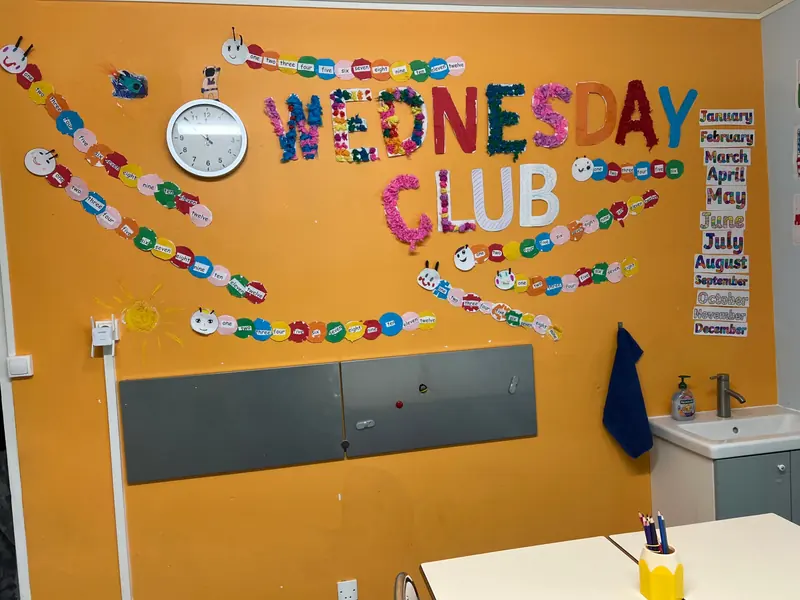
Children need opportunities to listen, respond, negotiate, joke, explain, question and play in that language.
For an English-speaking child living in France, these opportunities can be surprisingly limited.
School may take place entirely in French. Most friendships may happen in French. Sports, clubs and everyday activities may also take place in French.
English can therefore become increasingly concentrated in conversations with parents.
That is valuable — but it is not the same as using English across a wider range of social situations.
An immersive environment gives children something different: a reason to use English with other people, for real purposes.
Why Cultural Experiences Matter
Language and culture are closely connected.
For many English-speaking families, Halloween is much more than costumes, pumpkins and sweets. It is part of a cultural world children encounter through family traditions, stories, films, books and memories.
Giving children the opportunity to experience Halloween in English allows them to connect the language with that wider cultural context.
They are not simply learning words such as pumpkin, witch or ghost.
They are using English while taking part in stories, games, creative activities and traditions associated with Halloween.
The language becomes connected to experience, emotion and culture.
That connection is particularly valuable for children growing up between two languages and two cultural environments.
Speaking English With Other Children
One of the challenges for bilingual children is that English can become primarily a family language.
Speaking English with parents is one thing.
Using English to make friends, play a game, solve a problem, tell a story or negotiate with another child is something else.
These situations require a different kind of flexibility.
Children have to listen carefully, react spontaneously and find ways to make themselves understood.
They are using English not because an adult has asked them to practise it, but because English is the language they need to participate.
That distinction matters.
Storytelling Creates Natural Language
Stories are particularly powerful in an immersive environment.
A child does not listen to a story because they are trying to practise English grammar. They listen because they want to know what happens next.
They follow characters, anticipate events, react to surprises and discuss what they have heard.
Along the way, they encounter vocabulary, expressions and sentence structures naturally.
For English-speaking children, this also provides an opportunity to maintain and expand the language they already know.
They can hear different ways of expressing ideas, discover new vocabulary and experience English being used outside the familiar context of home.
Play Encourages Spontaneous English
Play creates another important opportunity.
When children play together, language becomes functional.
They need to explain the rules, make suggestions, ask questions, disagree, cooperate and react to what the other children are doing.
There is no vocabulary list to complete.
There is simply something they want to do.
This is one of the strengths of genuine immersion: English becomes the means of communication rather than the subject of the activity.
Authentic English, Authentic Culture
The people leading an immersive experience matter.
A native English-speaking educator brings more than pronunciation.
They bring the rhythm of the language, everyday expressions, humour, cultural references and the natural ways in which English is used in conversation.
For children who already speak English, this exposure can help broaden their linguistic environment.
They are not simply hearing the English used at home. They encounter different voices, expressions and ways of communicating.
This is particularly valuable for bilingual children, whose English is developing alongside French.
Halloween at the Da Vinci Club
This is the idea behind the Da Vinci Club Halloween Holiday Camp.
Halloween provides a familiar and engaging cultural theme, while English becomes the natural language of the experience.
Through storytelling, games, creative activities, cultural exploration and group interaction, children have the opportunity to use English with other children in a genuinely immersive environment.
For English-speaking families living in France, it offers something that can be difficult to recreate during everyday life:
a space where English is not simply the language spoken at home.
It is the language of play, friendship, imagination and discovery.
And that is an important part of helping children not only maintain their English, but continue to develop it.