


Life at Da Vinci
School uniform: why we chose it
11 August 2026
School uniform divides opinion.
For some parents, it suggests tradition, discipline and a sense of belonging. For others, it recalls an overly strict school, an attempt to squeeze every child into the same mould.
At Da Vinci Private School, we chose a uniform knowingly. Not so that children look alike.
But so that what sets them apart is not their clothes.
That is an important nuance.
Uniform: a constraint or a choice?
Yes, a uniform imposes a rule. We are not pretending otherwise. There is a set outfit for school, and it must be worn. That is one more constraint compared with a school where every child comes dressed as they like.
But every school runs on constraints. You don’t run in the corridors. You respect others. You listen. You arrive on time. You look after the equipment. You sometimes do an exercise you would not have chosen.
So the question is not whether a school should have rules. The real question is: which rules are useful, and why?
Our choice of a uniform starts from that question.
Creating a shared framework
A school is a community. Different children come together every day to learn together, work together and grow together.
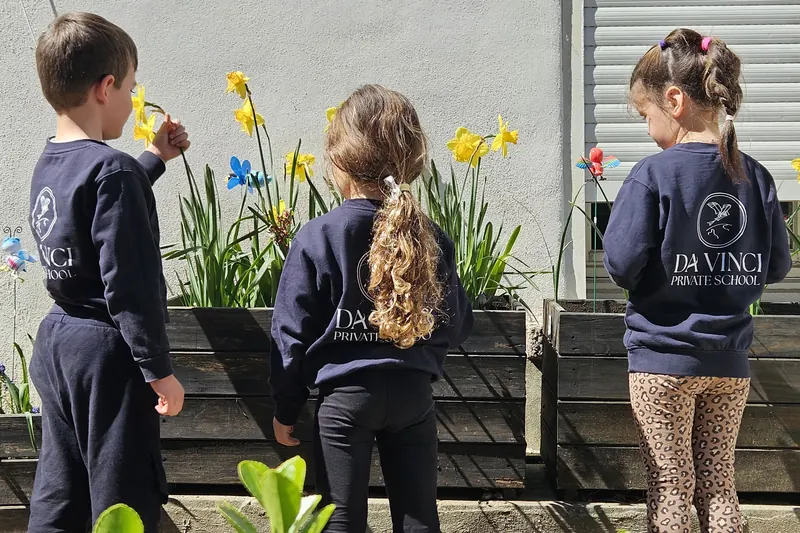
A uniform makes that belonging visible. It creates something shared between children who may otherwise have very different personalities, tastes, stories and backgrounds.
The message is simple: “Here, we are part of the same group.”
And this group is not just children side by side. It is a group whose members help, support and cooperate with each other: you explain to a classmate what you have just understood, you encourage the one who is struggling, you organise yourselves to see a project through. Wearing the same outfit is a daily reminder that each child’s success also depends on the others.
This does not deny differences. It creates common ground. And that distinction is essential.
Uniform does not mean uniformity
This is probably the most important idea behind our choice. Putting fifteen children in the same outfit obviously does not make them identical.
- One is passionate about dinosaurs; another draws all day.
- One asks a hundred questions; another watches before speaking.
- One loves maths; another tells extraordinary stories.
- Some are very comfortable speaking; others need more time.
- Some move quickly; others build their learning step by step.
The clothes may be identical. The child is not.
And it is precisely that individuality that our teaching approach seeks to develop.
Not making appearance the centre of school life
Children compare themselves. That is normal. But clothes can become a particularly visible ground for comparison: brands, trainers, fashionable clothes, prices, styles, the latest thing…
A uniform obviously does not remove social differences. We should not credit it with magic powers it does not have. But it makes them less visible at school.
For a few hours, clothes matter less. A child does not need to think every morning about the image their outfit will give of them. They can simply come to school. Learn. Play. Talk. Build. Get things wrong. Start again.
A paradoxical kind of freedom
It may sound contradictory: how can a dress code create more freedom?
Because not every freedom is about having more choices. Sometimes, removing a secondary choice frees attention for something more important.
In the morning, the child does not have to decide which outfit matches what they want to show that day. The family does not have to negotiate with them every morning. And at school, clothes take up less room in children’s relationships with each other.
It is not a revolution. But education is also made of small choices that make daily life simpler and clearer.
Uniform and the school’s identity
We want children to be proud of their school. Not just because it is pretty, or because it has a logo. But because they feel they belong to a community that shares certain rules and ambitions.
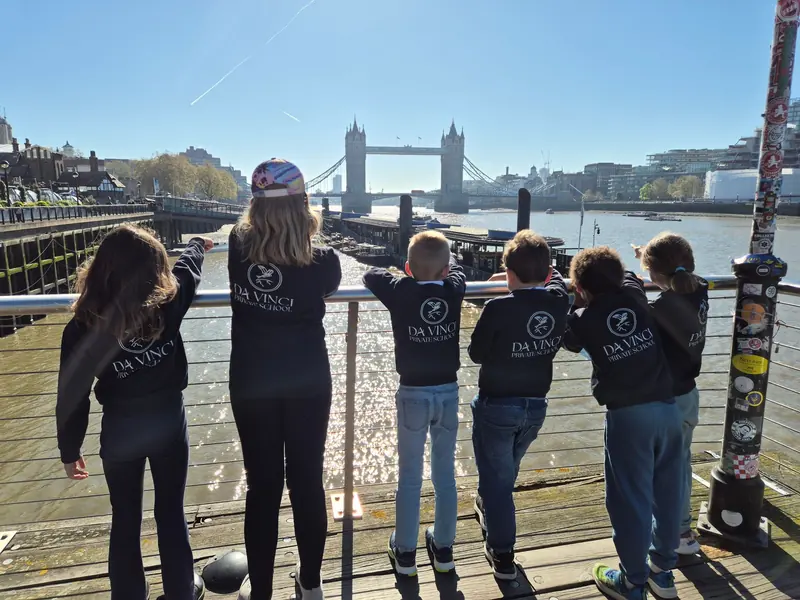
A uniform makes that belonging tangible. When children arrive at school, they are not just individuals following their own programme: they also become members of a group.
This is especially true in a small school like ours. In a small community, everyone knows each other better. Relationships matter. How you behave towards others matters. Belonging matters.
The uniform then becomes a simple symbol of that community.
But a community is not an army
This is where our view of uniform differs from a purely disciplinary one.
We are not looking for a school where children obey mechanically. We want a school where they gradually learn to understand rules, to respect some of them because they protect the group, and to develop their own judgement — their critical thinking.
That goes for uniform as for everything else. Children learn to live with others, not to obey for the sake of obeying.
A shared framework, individualised teaching
This is where uniform connects directly with our approach to teaching. At Da Vinci Private School, we talk about individualised active learning: we seek to build a shared framework while taking account of each child.
Learning objectives are not dropped. Rules do not disappear. Expectations remain. But we also know a child is more than a school level. They have their own pace, strengths, difficulties, and their own way of understanding, taking part and progressing.
So the uniform stands for something quite simple: a shared framework on the outside, individualisation on the inside.
Demanding without crushing
We believe a child can be respected without everything being allowed.
- They can be listened to without every request becoming a rule.
- They can be encouraged without being told everything they do is wonderful.
- They can be independent and still have limits.
- They can be free to think while respecting others.
This view assumes a form of high expectations. But expectations need not be harsh. They can be clear, predictable, fair and supported.
That is the combination we look for: a solid framework and a relationship of trust.
Why it fits a bilingual school
Da Vinci Private School welcomes children in a French and English environment. Two languages, different cultures, different personalities, families with different journeys.
This diversity is part of what we want to pass on to children. But for diversity to really work, it needs shared space. The uniform is a very concrete symbol of it.
It does not say: “We are all the same.”
It says: “We belong to the same place, even though we are different.”
And that distinction reflects our view of education deeply.
Does uniform prepare children for real life?
People sometimes say that a child will have to learn to dress as they wish as an adult. True. But that is not really the point.
School is not meant to reproduce adult life exactly. It creates an environment where a child can learn certain things before meeting them in all their complexity:
- respecting a framework;
- living with shared rules;
- working with different people;
- doing their share in a group;
- developing their individuality without stopping others from expressing theirs.
Those are exactly the lessons that interest us. Uniform is just one small element among many.
What if uniform helped us see the child better?
In the end, this is the simplest reason for our choice. We don’t want a child to be noticed for what they wear. We want them to be noticed for what they do:
- for a particularly sharp question;
- for an original idea;
- for progress;
- for effort;
- for a solution found after several attempts;
- for a story told in English;
- for a problem they managed to solve;
- for care shown to a classmate;
- for a new skill.
We want children to build their identity through their actions, relationships, learning and personality — not through the brand of their hoodie.
That is the spirit in which we chose a uniform. Not to erase differences. Not to impose a shared personality. Not to make school a place of conformity. But to create a shared framework in which every child can gradually find their place.
Same outfit. Different children. One community.
And above all, a school where who the child becomes matters more than what they wear.
Discover our school, our bilingual pre-school and our bilingual primary school, or read the short answer in our frequently asked questions.
Ready to discover the Cocon d'Évolution?
The micro-campus welcomes 45 children in total. Take the time to talk with us and see whether the school is right for your child.
Apply for Admission