


Understanding our approach
Individualised teaching: how to adapt learning to each child
19 May 2026
Two children can sit in the same class, listen to the same teacher and receive exactly the same instructions. And yet they are not having the same learning experience.
One has already understood. Another is only just beginning to. A third has grasped the principle but cannot yet apply it. Another needs to handle things to really take the idea in. And one last child knows the answer perfectly well but doesn’t dare speak up.
So a question arises: can every child really be taught effectively in exactly the same way?
That is what individualised teaching is all about.
What is individualised teaching?
Individualised teaching means taking into account each child’s characteristics, needs and progress in order to adapt, where it makes sense, the support they receive.
It does not mean that each child follows a completely different programme. That would hardly be realistic in a class.
The idea is rather not to treat the differences between children as a problem to be eliminated. They are part of the reality of every class.
Individualised teaching therefore sets out to adapt, among other things:
- pace;
- level of difficulty;
- materials;
- explanations;
- ways of working;
- support;
- intermediate goals;
- and sometimes the activities themselves.
The principle is simple: start from where the child really is, and help them move forward.
Why don’t all children learn at the same pace?
Because they never start from exactly the same place.
A child starting primary school may already know many letters and be beginning to read. Another may still be consolidating the links between sounds and letters.
One child may be very comfortable with mental arithmetic but struggle to write out their reasoning. Another may have excellent listening comprehension but still lack the confidence to speak up.
These differences do not necessarily mean one child is “better” than another. They simply mean their learning paths are not the same.
The school’s role is precisely to help each of them progress.
Individualising does not mean letting each child do as they please
This is an important confusion.
Individualised teaching is not a class in which each child chooses their activity, level and pace with no framework. School remains a structured place of learning. There are:
- objectives;
- knowledge to acquire;
- skills to develop;
- rules;
- constraints;
- whole-group times.
The difference lies in how the teacher supports children in reaching those objectives. There can be one shared goal and several paths to it.
Adapting pace: going further or going over it differently
Imagine a class working on a maths concept. Some children understand immediately. Others need several examples.
Teaching that is exactly the same for everyone can create two opposite problems:
- for the first group: “I’ve understood, but I have to wait.”
- for the second: “Everyone has understood except me.”
Individualisation tries to avoid both situations.
The child who has understood can go deeper. The one who needs more time can get another explanation, something to handle, an extra example or closer support.
The point is for each child to keep progressing, not for some to race ahead while others fall behind.
Adapting does not mean lowering expectations
This is another misconception.
Taking a child’s needs into account does not necessarily mean asking less of them. Sometimes, adapting means precisely raising the bar.
A child who masters a skill quickly may be asked to:
- explain their reasoning;
- find a second solution;
- solve a more complex problem;
- create their own exercise;
- apply the idea in a new situation.
They are not simply given more exercises. They are asked to go further.
Conversely, a child who is struggling may need to consolidate a fundamental skill before moving on to the next step.
The expectations remain. The path may simply be different.
What if the child learns better another way?
Not all children approach an activity in the same way.
Some understand a spoken explanation very quickly. Others need to see. Others understand when they handle things. Others need to connect it to a real situation.
That does not mean each child should be boxed into a rigid “learning style”. It is more useful to have several ways of explaining and practising the same idea.
To understand a maths concept, for example, a child might:
- handle objects;
- look at a visual representation;
- solve a problem;
- explain their reasoning;
- write an answer;
- compare their method with a classmate’s.
Several doors can lead to the same understanding.
The teacher’s role changes
In very uniform teaching, the teacher mainly passes the same information to the whole group. In a more individualised approach, the teacher also becomes an observer, watching:
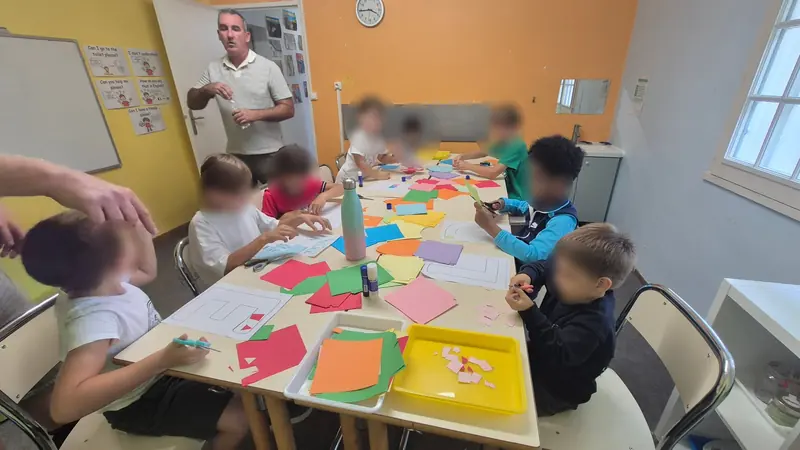
- who has understood;
- who is hesitating;
- who is making mistakes;
- why the child is making that mistake;
- who could go further;
- who needs another explanation;
- who simply lacks confidence.
That takes time. But above all, it requires really knowing the children in the class.
Saying “This child has difficulties in maths” is rather vague.
Saying “He understands the reasoning when he handles objects, but gets stuck when he has to set it out in writing” is far more useful.
The second observation makes it possible to act.
Why tracking progress matters
Individualising teaching requires knowing where the child is. That means observing their progress regularly.
It is not necessarily about multiplying tests. It is about being able to answer concrete questions:
- What can the child do today?
- What are they beginning to master?
- Where are they still struggling?
- What should the next step be?
This approach looks at the child’s progress rather than reducing them to a mark or a comparison with others.
Children also need to learn their own strengths
Individualisation is not only the teacher’s business. It can gradually make children more aware of how they work. For example:
- “What helped you understand?”
- “Where did you find it hard?”
- “How could you go about it differently?”
- “What do you need to finish?”
These questions gradually develop an essential skill: learning how to learn.
The child does not become independent overnight. But they start to understand that their difficulties are not necessarily set in stone. They can try. Change their method. Ask for help. Start again. Check. Progress.
Can you individualise in a large class?
Yes. But the possibilities and constraints are not the same.
A teacher can of course observe and support children individually in a large class. But the more children there are, the harder it becomes to spend time with each one.
That is one reason why group size can matter. Not because a small class is automatically better, but because it can make it easier to have:
- interaction;
- observation;
- discussion;
- individual feedback;
- real knowledge of each child.
The teaching team still has to make real use of that opportunity. A small class in which everyone receives exactly the same teaching in the same way is still just a small class.
Individualisation depends above all on what you do with it. We come back to this in Why can small classes change the way a child learns?
Individualising in a bilingual class
The question becomes even more interesting when two languages are used.
Not all children arrive with the same level of French or English. Some may understand a lot but speak little. Others may be very at ease speaking but still short of vocabulary. Others have already been exposed to English for several years.
An individualised approach can take these gaps into account without turning every activity into a private lesson.
The aim is for the child to take part, understand and progress in both languages. The starting level should therefore not be confused with the potential for progress.
Individualised teaching is not total “made-to-measure”
This is probably the limit that most needs stating clearly.
No school can build an entirely different day for each child every morning. Children also need to learn to:
- function as a group;
- follow shared rules;
- listen to others;
- wait their turn;
- cooperate;
- accept certain constraints;
- carry out tasks that are not always exciting.
Individualisation therefore has to strike a balance between the group and the individual. It is precisely that balance that makes it interesting.
The child belongs to a group. But they remain a person with their own path.
How can you tell whether a school really practises individualised teaching?
The word can easily appear in an educational project. So ask for examples:
- “What do you do when a child has already mastered an idea?”
- “What do you do when a child still doesn’t understand after several explanations?”
- “How do you track individual progress?”
- “How do you know a child needs a different method?”
- “Can you give me a concrete example of how you adapted your teaching?”
The answers are often more revealing than slogans. A school that really practises individualised teaching should be able to explain what it observes and what it does next.
At Da Vinci Private School
At Da Vinci Private School, individualisation is part of a wider project combining small groups, active learning and bilingual French-English teaching.
The aim is not to create a school where each child learns completely apart from the others. Quite the opposite. Children learn together. They cooperate. They exchange ideas. They carry out projects.
But the team also seeks to take their progress and needs into account when supporting their learning.
Because a child is not simply “in CP”, “in CE1” or “in CM1”. They are also themselves, with what they already know, what they are discovering, what they find hard and what excites them.
Find out how progress is assessed and discover our bilingual primary school.
What if we changed the question?
Instead of asking “Is my child at the level of their class?”, we could sometimes ask another question: “Is my child really progressing from where they are today?”
The difference is huge. The first question compares. The second follows a path.
And a school’s role is not only to determine where a child stands. It must also help them move forward.
Key points
Individualised teaching does not mean that each child receives a completely different programme. It mainly means taking the real differences between children into account to better support their progress.
This can concern:
- pace;
- level of difficulty;
- explanations;
- materials;
- support;
- intermediate goals;
- independence.
Good individualisation means letting each child progress from their own starting point, rather than asking less of some and more of others.
Because a class can share a curriculum. But it should never forget that it is made up of many individual human paths.
Every child arrives with a different story. The school’s task is to help them build what comes next.
Ready to discover the Cocon d'Évolution?
The micro-campus welcomes 45 children in total. Take the time to talk with us and see whether the school is right for your child.
Apply for Admission