


Helping your child build confidence
Self-confidence at school: how to help a child dare to learn
24 March 2026
Some children put their hand up before they have even finished thinking.
And then there are those who sometimes know the answer… but look around before speaking. Those who rub out their sentence three times. Those who say:
- “I’m useless at maths.”
- “I don’t know.”
- “I’ll get it wrong.”
- “The others are better than me.”
For a parent, these little phrases can hurt. Because you are no longer just looking at a school result. You are watching your child begin to doubt themselves.
Yet self-confidence at school does not mean a child must feel sure of themselves all the time. It is built gradually, through very concrete experiences: trying, failing, trying again, succeeding at something difficult, asking for help, and discovering that a difficulty does not define their worth.
Self-confidence is not believing you are good at everything
This is probably the first confusion to avoid.
A confident child does not think “I’m bound to succeed”. They may rather think: “I don’t know yet if I’ll succeed, but I can try.”
That difference is huge. Solid confidence does not rest on the certainty of success. It rests more on the ability to cope with uncertainty and difficulty without giving up straight away.
So a child can be confident while saying “I don’t understand”. And even: “I need help.”
Asking for help is not the opposite of independence. Sometimes it is exactly what makes it possible to keep going.
Why do some children stop daring?
There is, of course, no single explanation.
A child may have built up several difficult experiences. They may often have felt they were “the last one”. They may be particularly sensitive to mistakes. They may compare themselves a lot with others. They may need more time to understand. They may be afraid of speaking in front of the group. They may also have gone through a period when school expectations were too hard — or, on the contrary, not stimulating enough.
And sometimes, what holds a child back has less to do with ability than with how they interpret their difficulties.
A child can go from “I haven’t understood yet” to “I’m bad at this”. And that second sentence can become far more limiting than the original mistake.
A mistake should not become an identity
Imagine a child who regularly gets things wrong in maths.
If every mistake feels like proof that they are “bad at maths”, they may gradually avoid situations where they could fail. They stop searching. They wait. They copy. They give up quickly.
And a vicious circle can set in: fear of getting it wrong → fewer attempts → less learning → more difficulty → even more fear.
If, on the other hand, a mistake is treated as a step in reasoning, the child can begin to think: “That method didn’t work.” Which is very different from: “I’m useless.”
The first sentence leaves a door open. The second closes it.
Sometimes the adult’s role is to slow down judgement
When a child fails, the spontaneous reaction may be “But you knew how to do it!”, “Pay attention!” or “You didn’t concentrate enough.”
These phrases may be said with no ill intent. But they don’t necessarily tell the child what to do next.
Another approach is to try to understand:
- “Where did it get complicated?”
- “What were you trying to do?”
- “What got in your way?”
- “Can we try another way?”
The child then receives a different message: a difficulty is something we can examine. It is not necessarily proof of weakness.
Confidence is built through real successes
Repeating “You’re wonderful!” is not enough to build a child’s confidence for the long term.
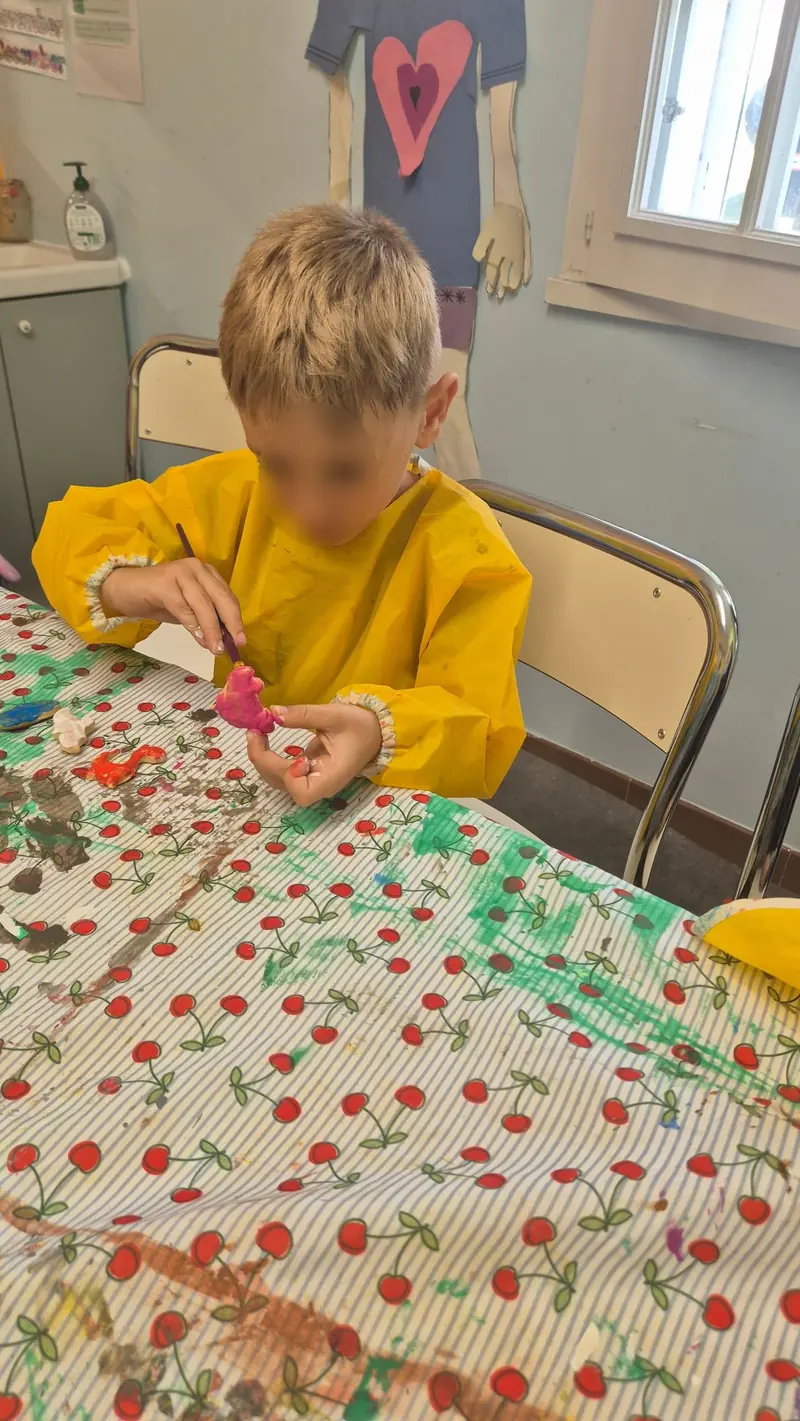
Encouragement can feel good. But experience is often more powerful.
A child who thought they would never manage to read a text, and who finally reads it alone, has just lived something concrete. A child who never dared speak English, and who finally speaks up in front of their group, has just lived something concrete. A child who always gave up on problems, and who finally finds a strategy, has just lived something concrete.
They can then tell themselves: “I managed something I thought I couldn’t do.”
That experience is far more solid than a simple compliment.
But children also need to meet difficulty
This may sound paradoxical. If we want a child to be confident, why not make things easy for them?
Because a child who never meets difficulty has few chances to discover that they can overcome it.
The aim is obviously not to set the child up to fail. It is to offer challenges within their reach, but not always immediately easy. A small step up in difficulty. Then another. Then another.
Confidence can then be built on a succession of “I couldn’t do it yet”, followed by “I found a way”.
This is where individualised teaching really matters
Two children may need completely different challenges.
For one, reading a short text alone may be a real achievement. For the other, that will already be mastered, and a more complex task is needed.
If everyone gets exactly the same difficulty, at the same time, with exactly the same level of help, some children risk always facing a task that is too hard. Others risk never being stimulated enough.
Individualised teaching aims precisely for a better fit between what the child can already do and what they can learn to do next.
Small classes can change the nature of these interactions
In a large group, a quiet child can easily go unnoticed. They may hardly ever speak. The teacher may not always see that they had an idea but didn’t dare share it.
In a small group, the opportunities to interact are different. The teacher can observe more. Encourage a child to take part. Give them time to put their thoughts into words. Spot a difficulty before it takes hold. And above all, gradually get to know how each child reacts.
But again, a small class is not a guarantee in itself. What matters is what is done with that closeness.
What if the child does very well but still lacks confidence?
This point is often overlooked. A good academic level does not automatically protect against self-doubt.
Some children who do very well can also be very afraid of making mistakes. They may be used to succeeding quickly, and find it very hard on the day something becomes truly difficult.
The first failure can then be particularly unsettling. The child suddenly discovers: “I don’t know how to do this.” And if they have built their self-image around success, that experience can be hard.
So it is important to value as well:
- the effort of searching;
- perseverance;
- the ability to ask for help;
- changing strategy;
- progress;
- the ability to recognise a mistake.
A child’s worth should never depend on their school results.
Comparison with others can do a lot of damage
“Look, your sister can already do it.” “Your classmate finished before you.” “You’re the only one who didn’t understand.”
These comparisons may seem harmless. But the child does not always hear them as simple information. They may hear: “The others can. I can’t.”
An approach centred on progress shifts the comparison. Instead of asking “Are you better than the others?”, we can ask: “Have you made progress since last time?”
This change of perspective can be particularly important for children who need more time. We come back to this in How to follow a child’s progress at school beyond marks.
Confidence also comes through independence
A child whose adults constantly do things for them can hardly discover that they are able to do those things themselves.
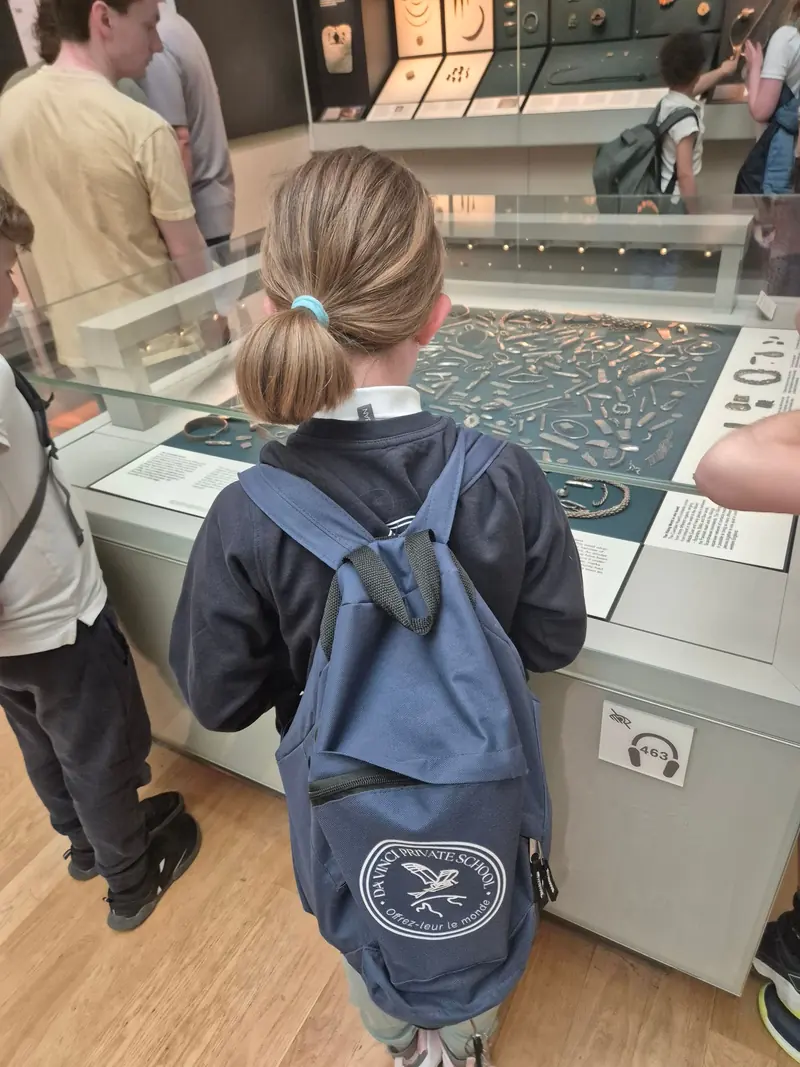
That doesn’t mean leaving them to cope alone. It means, gradually: “Try first.” Then: “I’m here if you get stuck.” Then: “What could you try now?”
The adult is still there. But they don’t take away the child’s chance to experience their own ability to act.
That is precisely the difference between leaving a child alone and helping them become independent.
How can you tell whether a school really helps build this confidence?
Brochures often talk about fulfilment. But you can ask much more concrete questions. For example:
- “How do you react when a child makes a mistake?”
- “What do you do when a child doesn’t dare take part?”
- “How do you support a child who compares themselves a lot with others?”
- “How do you encourage a child to try before asking for the answer?”
- “How do you adapt the level of difficulty to the different levels in the class?”
- “How do you talk about progress with parents?”
- “What do you do when a child starts losing confidence?”
The answers can help you understand how much room the school really gives to confidence and to mistakes.
And parents?
Parents obviously cannot solve every school difficulty. But they can help create an environment in which the child does not need to protect their image all the time.
It can start with a very simple sentence: “You don’t need to know straight away.” Or: “Let’s try to understand what’s getting in the way.” Or: “You made a mistake. It happens. What can we learn from it?”
And sometimes, the most important thing is simply not to turn every school difficulty into a judgement about the child.
They are not “lazy” because they didn’t manage today. They are not “bad at maths” because one idea is giving them trouble. They are learning.
Real confidence may begin with “I can try”
We sometimes imagine the confident child as the one who puts their hand up, speaks loudly and seems completely sure of themselves. That is not necessarily so.
A child can be reserved and have very good self-confidence. They may prefer to think before speaking. They may not try to be first.
But when they meet a difficulty, they keep moving forward. They can say “I don’t know”. Then “I’ll try”. And perhaps even: “I got it wrong. I’ll start again.”
That is a much deeper form of confidence than mere self-assurance.
At Da Vinci Private School
At Da Vinci Private School, we try to create an environment in which children can make progress without feeling that every mistake defines their worth.
Small groups, attention to each child, hands-on activities and learning through enquiry create situations in which children can try, make mistakes, start again and see their own progress.
Making children believe they will always succeed would not help them for long. Better that they discover, little by little, something far more precious: “I don’t know yet. But I can try.”
Discover our bilingual pre-school and our bilingual primary school.
Ready to discover the Cocon d'Évolution?
The micro-campus welcomes 45 children in total. Take the time to talk with us and see whether the school is right for your child.
Apply for Admission